Wednesday, 26 August 2026
Unfunded Demand: 10 Indian Product Ideas
Venture funding is just one signal; real demand usually shows up on the shelf, in regulatory shifts, or in niche communities first. Today, we're looking at specific triggers from this week—including FSSAI mandates, ONDC integrations, and SaaS pivots—that reveal 10 distinct, high-margin product opportunities for the Indian market.
10 Product & Brand Wedges for India
- 01
Legacy Codebase AI Agent
SaaS / Dev Tool
- The idea
- A localized AI-agent IDE optimized for modernizing legacy Indian IT service codebases, uniquely trained to parse outdated vernacular code comments.
- Why now
- Product Hunt's August newsletter highlights a massive pivot toward AI agents and open models (Framer AI Agents, Antigravity IDE), proving developers are moving past mere autocomplete toward autonomous workflows.
- Global precedent
- Cursor, Antigravity IDE, Devin (US).
- The India-specific gap
- Indian IT services giants sit on mountains of poorly documented legacy code; generic US-based AI agents lack context for localized project management quirks and Indian enterprise constraints.
- One real risk
- Large IT firms will either build this internally or strictly ban third-party LLMs for data privacy and compliance reasons.
- 02
Traceable Kids' Snacking
FMCG / Nutrition
- The idea
- A premium, clean-label kids' lunchbox snack brand offering 100% transparent ingredient sourcing via blockchain or QR.
- Why now
- FSSAI has just rolled out strict new mandates across Maharashtra in August 2026 to regulate safe, nutritious school diets, heavily cracking down on unregulated additives.
- Global precedent
- Once Upon a Farm (US), Yuka (France).
- The India-specific gap
- Following the Bournvita and MDH spice controversies, affluent Indian parents lack a truly trusted, certified-clean brand for daily school snacking.
- One real risk
- High COGS for clean, certified sourcing means the premium price point restricts the TAM strictly to top-tier metro cities.
- 03
Melanin-First Barrier Repair
Beauty / Skincare
- The idea
- A premium, melanin-first active skincare line explicitly formulated for Indian skin barrier repair, avoiding generic fairness tropes.
- Why now
- Skincare brand World of Asaya just raised ₹88 Crore at a ₹400 Crore valuation in late August 2026, signaling massive investor appetite for specialized, targeted D2C skincare over broad personal care.
- Global precedent
- EADEM (US), Topicals (US).
- The India-specific gap
- Most Indian active skincare mimics Korean or Western formulations (like high-percentage peeling acids) which can cause hyperpigmentation on Indian skin; there is a glaring gap for specialized melanin-safe formulas.
- One real risk
- Customer acquisition costs (CAC) in the hyper-crowded D2C beauty space will destroy margins before repeat purchases kick in.
- 04
Premium Blank Streetwear
Fashion / Apparel
- The idea
- A premium, unbranded 'blank' apparel line of heavyweight tees and hoodies bridging the gap between fast fashion and high-end streetwear.
- Why now
- D2C streetwear brand MyDesignation raised ₹40 Cr this week specifically to expand offline, with the overall Indian streetwear market projected to hit $26Bn by 2026.
- Global precedent
- Rue Porter (Europe), Lady White Co. (US).
- The India-specific gap
- Indian consumers either buy cheap fast-fashion basics that shrink and fade, or overpay for logo-heavy streetwear. There is no definitive high-GSM, luxury unbranded basics player.
- One real risk
- Competing with the aggressive pricing of fast-fashion giants like Zara and H&M will make it incredibly difficult to establish the initial premium positioning.
- 05
EV Garage Management OS
Vertical SaaS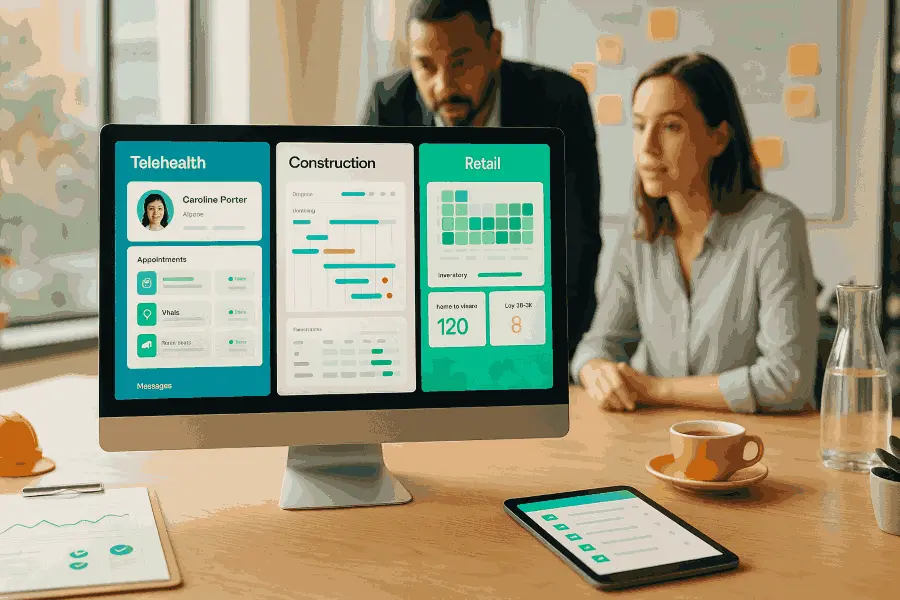
- The idea
- A lightweight mobile-first garage management OS specifically built for independent 2-wheeler and 3-wheeler EV repair shops.
- Why now
- A Qubit Capital industry report from this week specifically calls out a massive shift in Vertical SaaS providers pivoting to emerging sectors like EV maintenance as hardware funding surges.
- Global precedent
- Shopmonkey (US).
- The India-specific gap
- As EVs flood Tier 2/3 cities, unorganized local mechanics are struggling with battery diagnostics and OEM parts ordering, but current SaaS is entirely built for ICE (internal combustion engine) 4-wheelers.
- One real risk
- Unorganized local mechanics have notoriously terrible software retention and an extremely low willingness to pay for subscription SaaS.
- 06
ONDC Premium Aggregator
E-Commerce / Retail
- The idea
- A unified, luxury consumer front-end app built strictly on ONDC that aggregates premium D2C brands for 2-hour delivery.
- Why now
- PepsiCo India and Amazon logistics both formally integrated with the ONDC platform this week, proving the backend logistics layer is finally mature enough for major FMCG volume.
- Global precedent
- Shop App by Shopify (US).
- The India-specific gap
- Premium D2C brands want the speed of quick commerce without paying Zepto or Blinkit's exorbitant 30-40% margin cuts; ONDC provides the cheap rails but lacks a polished, high-trust consumer interface.
- One real risk
- Deep-pocketed quick commerce players could simply launch their own curated 'premium' tabs and crush the aggregator with sheer capital.
- 07
Women's Hormonal Smart Ring
Consumer Hardware
- The idea
- A 'Made in India' smart ring focused entirely on localized women's hormonal and metabolic health, mapped to Indian dietary habits.
- Why now
- Hardware funding in India hit $365M in H1 2026, and August's Startup League DeepTech competition is heavily targeting consumer tech and semiconductor innovations.
- Global precedent
- Oura Ring (Finland), Evie Ring (US).
- The India-specific gap
- Existing Indian wearables (Ultrahuman, boAt) skew heavily toward male fitness-bro aesthetics; a device tracking PCOS, thyroid issues, and local carb-heavy diet impacts is missing.
- One real risk
- Hardware supply chain complexities and high upfront R&D costs make it heavily reliant on continuous venture capital injections.
- 08
WhatsApp-First Solopreneur CRM
SaaS / Productivity
- The idea
- A mobile-first, WhatsApp-integrated personal CRM and task manager for Indian freelancers, replacing heavy desktop tools.
- Why now
- Wellows' August 2026 SaaS trends report highlights startups like Griply solving 'tool sprawl' for individuals, moving away from complex team dashboards to simple personal workflows.
- Global precedent
- Griply (US), Dex (US).
- The India-specific gap
- Indian solopreneurs live entirely on WhatsApp and UPI; desktop-heavy tools like Notion are overkill. A unified inbox over WhatsApp APIs matches actual local behavior.
- One real risk
- WhatsApp's notoriously strict API pricing and policy changes could break the unit economics or core functionality overnight.
- 09
RTD Premium Cold Brew Can
FMCG / Beverage
- The idea
- A high-margin, zero-sugar premium specialty cold brew in cans, positioned strictly for corporate offices and quick commerce.
- Why now
- Third Wave Coffee just closed a massive Series D (reported at ₹2554M+) led by WestBridge Capital this week, cementing the scale of the specialty coffee demand.
- Global precedent
- La Colombe Draft Latte (US), Blue Bottle Cold Brew (US).
- The India-specific gap
- Major players are scaling capex-heavy cafes. RTD coffee in India is still dominated by sugar-heavy mass-market milk coffees (Nescafe); there is no ubiquitous premium zero-sugar cold brew can.
- One real risk
- Cold chain logistics in India are notoriously difficult and expensive, restricting nationwide distribution and severely impacting margins.
- 10
NRI Parent Care Portal
Vertical SaaS / HealthTech- The idea
- A remote care-coordination platform connecting NRI children with verified local medical attendants and emergency services for aging parents in India.
- Why now
- A late August report tracking vertical SaaS explicitly highlights a shift toward highly specialized software managing 'elder care' as a breakout niche globally.
- Global precedent
- Papa (US), Honor (US).
- The India-specific gap
- NRIs rely on fragmented WhatsApp groups and informal local networks to manage parents' health; there is no trusted, premium SaaS dashboard for real-time medical updates and vetted care bookings.
- One real risk
- Extremely high operational risk and legal liability if a partnered local service provider fails to show up during a medical emergency.
Try This Week
- Audit your quick-commerce margins: ONDC integration is now a viable escape hatch for D2C.
- Look at offline expansion earlier: Fashion brands are raising specifically for physical footprints.
- Don't build heavy SaaS for Indian solopreneurs: Move your product wedge to a WhatsApp interface.